
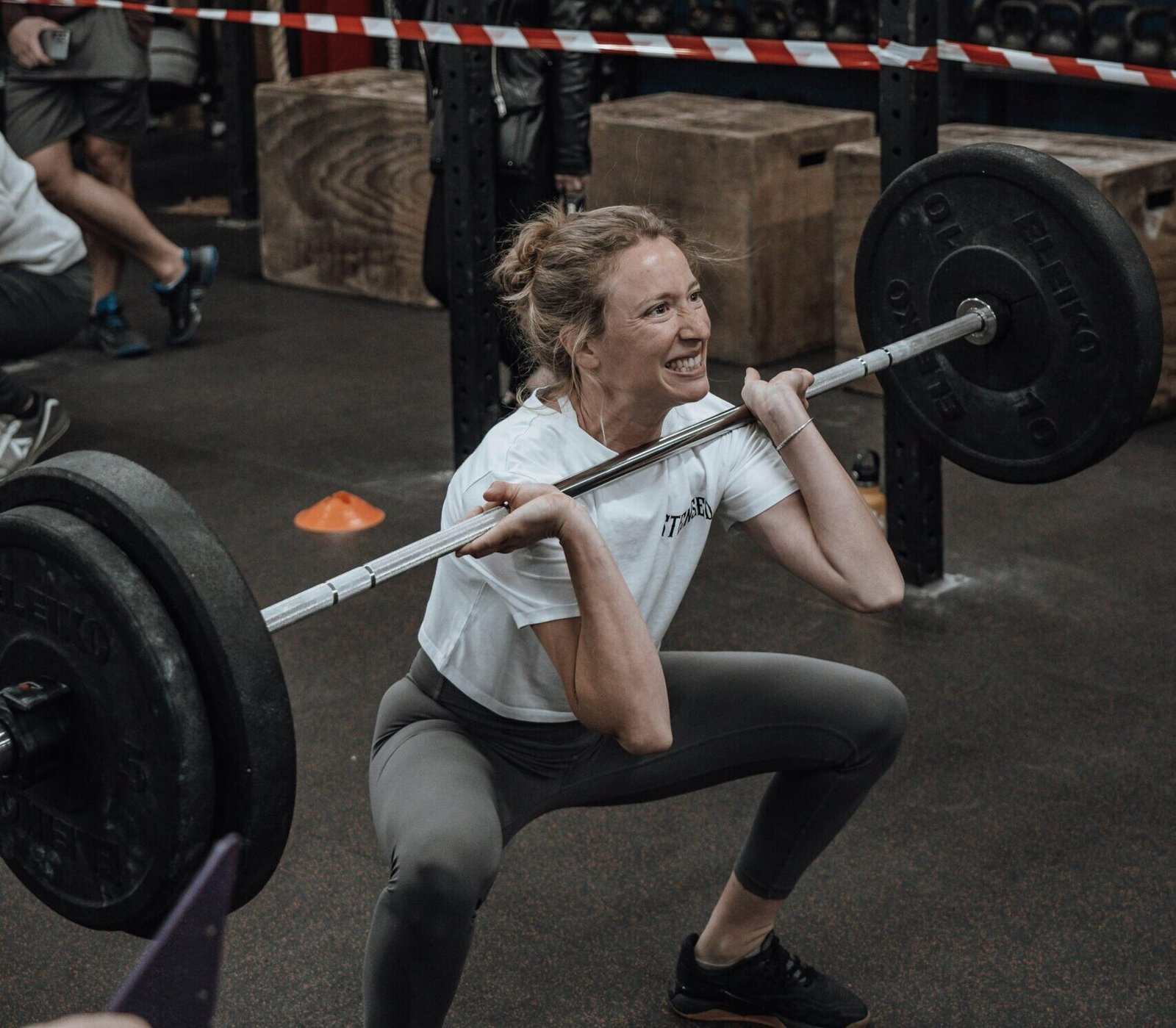
Being a mother of three means juggling quite a few things. Between school schedules, extracurricular activities, work, and family responsibilities, some days it’s difficult to find even a little time for yourself. And when life gets particularly busy, exercise can easily become one of those things you keep putting off.
I know what that’s like.
Four years ago, I began taking strength training seriously. At the time, I never imagined how much it would change my life, or that I’d eventually become a Certified Personal Trainer.
Today, lifting weights is something I genuinely look forward to. My body is stronger, my health has improved, and those moments I spend exercising have become an important part of my week.
Does that mean I always manage to follow my workout schedule? Absolutely not. With three children, there’s always something unexpected that can come up.
But over time, I’ve found ways to make strength training fit into my family life, rather than expecting my family life to fit around it.
Here’s what that looks like for me, and what I’ve learned along the way.
How My Strength Training Journey Began
Before I discovered strength training, my relationship with exercise was quite different.
I’d work out occasionally, mostly doing HIIT sessions and some strength exercises with lighter weights. There were workouts I enjoyed, but I wasn’t consistent, and exercising wasn’t always a priority.
As for lifting heavy weights? I honestly thought it wasn’t for me. I didn’t believe I was capable of it.
It was only after having my three children that I really discovered strength training. I was already in my thirties.
After facing some health challenges, I started paying more attention to my lifestyle and learning how nutrition, physical activity, and everyday habits could influence my well-being.
I wanted to feel better, improve my health, and become stronger.
To get started, I worked with a personal trainer for almost a year. Looking back, it was one of the best decisions I made.
I learned the fundamentals of proper exercise technique, how to organize my workouts, and how to split my training days to target different muscle groups. I also discovered that I was capable of lifting far more than I’d imagined.
And somewhere along the way, I began to really enjoy it.
By the end of that first year, I felt confident enough to continue training independently. Four years later, I’m still lifting, learning, and challenging myself.
My interest in exercise grew so much that I wanted to understand the science behind it. That eventually led me to become a Certified Personal Trainer .
Stronger in My Thirties Than Before Having Children
Here’s something I can confidently say today: my body is in better shape than it was before having my three children.
I’m stronger, my posture is better, and I’ve noticed improvements in my endurance and energy. Everyday physical tasks feel easier too.
Of course, I still get tired. Between motherhood, work, and everything else, some days are exhausting! And I know there’s room for improvement, particularly when it comes to my cardio fitness and VO₂ max.
But when I compare how I feel today with how I felt a few years ago, the difference is significant.
I started taking strength training seriously in my thirties, not in my twenties. And I think that’s an important reminder for women who believe they’ve left it too late to begin.
You can start building strength in your thirties, forties, fifties, or beyond. Your starting point may be different, but there’s still so much to gain from becoming more active.
As ISSA explains in its article on strength training for older adults, resistance training can support mobility, physical function, and quality of life as we age.
Why Lifting Weights Has Been So Transformative for Me
I’ll admit that seeing positive changes in my body has been rewarding. After three children, I appreciate feeling comfortable in my body and seeing the results of my hard work. My husband appreciates them too!
But what has kept me lifting goes well beyond appearance.
I love challenging myself. There’s something incredibly satisfying about picking up a weight that once seemed impossible and realizing I can now lift it with confidence.
And the more I’ve learned about strength training, the more I’ve come to appreciate what it does for our health.
Stronger Muscles, Healthier Bones, and Better Body Composition
Weightlifting helps us build and maintain muscle mass, which is important not only for body composition but also for everyday physical function.
It’s easy to think about muscle primarily in terms of appearance. Yet muscle strength plays a role in so many ordinary activities, from carrying groceries to lifting things around the house, maintaining balance, and staying physically capable as we get older.
Bone health is another major reason I encourage women to consider resistance training.
Our bones respond to the mechanical demands we place on them. Appropriately designed resistance training can help maintain or improve bone strength, which becomes particularly important as women age and bone density changes, especially around and after menopause.
You can learn more about the benefits of strength training for women’s bone health and why it becomes increasingly important as we age.
There’s also the cardiovascular and metabolic side. Resistance training can support blood pressure and blood glucose regulation, alongside its benefits for muscle strength and body composition.
I still include walking, incline treadmill sessions, and other cardio activities because aerobic exercise offers additional benefits. For me, the two complement each other.
And then there’s body composition. Building or maintaining muscle while managing body fat can help improve the balance between lean mass and fat mass. Of course, nutrition and recovery play important roles in that process too.
The Mental Benefits Matter Just as Much
As mothers, we spend so much time thinking about everyone else’s needs that it’s sometimes difficult to make ourselves a priority.
For me, exercise has become my personal time.
Whether I’m at the gym or training at home, I can focus on what I’m doing, challenge myself, and have a moment away from the usual responsibilities.
It brings balance to my week, and I genuinely notice the difference when I haven’t been able to exercise for a while.
Regular physical activity can support mental well-being and help reduce symptoms of anxiety and depression.
On a personal level, I often feel more relaxed and satisfied after a workout. Even on days when I wasn’t particularly motivated to go, I sometimes finish thinking, I’m so glad I did that.
Of course, that doesn’t mean forcing myself to train when I’m genuinely unwell or exhausted. I’ve learned to recognize when I need movement and when I need rest.
What I find remarkable is how much my confidence has changed. I used to think lifting heavy wasn’t for me. Now it’s something I enjoy and feel proud of.
That’s why I consider my strength training journey truly transformative.
How I Make Time for Strength Training With Three Children
One of the biggest challenges mothers face when it comes to exercise is simply finding the time.
And I completely understand.
When my children were little, particularly because of the small age gap between them, finding time for myself was difficult.
Even today, my schedule revolves around family commitments, school, work, and everything that needs to get done.
What helps me most is planning my training around the week ahead and making use of the opportunities I already have.
For example, when my children attend extracurricular activities, I often use that time to go to the gym. On other days, I work out at home while they’re at school.
And when I need a little extra time on the weekend, my husband can stay with the children while I head to the gym.
I think time management plays a big role here. Not in the sense of organizing every minute of the day, but in recognizing where exercise can realistically fit into your routine.
What My Current Workout Week Looks Like
At the moment, I usually exercise four to five times a week. When things get busy, I try to keep at least three strength sessions, covering my upper and lower body.
My program changes throughout the year depending on my goals, progress, and circumstances. Right now, I’m focusing a little more on lower-body training.
Here’s my current routine:
| Day | Workout |
|---|---|
| Monday | Upper-body strength training, usually around 45 minutes, plus walking |
| Tuesday | Glute-focused lower-body workout at the gym, followed by walking |
| Wednesday | Rest day, sometimes with a short treadmill walk |
| Thursday | Second lower-body session, followed by walking |
| Friday | Full-body strength training and incline walking/short sprint |
| Saturday | Usually a full rest day |
| Sunday | Optional Pilates, HIIT, walking, or another short session |
Most of my weightlifting sessions last around 40–45 minutes.
I don’t follow this schedule rigidly. Sometimes I move a session to Saturday morning, swap a gym workout for a home workout, or change the order of my training days.
While strength training is a big part of my routine, I also believe cardiovascular exercise is essential for overall health. It helps strengthen the heart, improve endurance, support cardiovascular fitness, and contribute to better metabolic health.
There are so many ways to include cardio in your routine, from walking, cycling, and swimming to running, dancing, or more intense activities like HIIT and sprint intervals.
Personally, some of my favorites are incline treadmill walking, regular walking, sprint intervals, and HIIT workouts. I enjoy mixing things up depending on my energy, training goals, and how I feel that day.
I also really enjoy Pilates, which I sometimes include in my weekly routine. Although it’s not my main form of training, I appreciate how it complements strength training by working on mobility, core strength, body control, and stability.
For me, combining weightlifting, cardiovascular exercise, and activities like Pilates is a great way to work on different aspects of my fitness while keeping my routine enjoyable.
I also make sure to leave room for recovery because more training doesn’t automatically mean better results.
Training at Home Makes Things Easier
I enjoy going to the gym, but having equipment at home has made a real difference to my consistency.
I have dumbbells, a barbell, a treadmill, and a few other things that allow me to exercise without leaving the house.
I don’t have a dedicated home gym. I simply use the space and equipment I have.
And you don’t necessarily need a gym membership to make progress with strength training.
With suitable equipment, good exercise technique, and a program that gradually challenges your muscles, home workouts can be very effective.
Being able to switch between the gym and home gives me the freedom to continue training when my schedule changes.
When Motherhood Doesn’t Go According to Plan
Some weeks, I manage all my planned sessions. Other weeks, things are quite different.
One of the children gets sick, I’m unwell myself, my period leaves me more tired than usual, or I have more work and responsibilities to manage.
On those days, a 45-minute workout might become 20 minutes. Sometimes I just walk, and sometimes I don’t exercise at all.
I’ve learned to accept that.
A recent example was when I had the flu. I felt really unwell and stopped exercising for around a week and a half.
Even when I started feeling better, my strength and energy hadn’t fully returned. The weights I normally lifted felt heavier, and I couldn’t train at my usual intensity.
So I adjusted my workouts. I reduced the weights, shortened my sessions, and gradually worked my way back as my energy returned.
It was frustrating at times, but there was no point in rushing.
One thing I always try to remember is that exercise should make our bodies healthier and stronger, not become something we use to punish ourselves.
Recovery is part of the process. After illness, it’s important to return gradually once you’re well enough rather than forcing yourself back to your usual training intensity.
That means getting enough rest, eating well, drinking enough water, and understanding that progress won’t always look the same every week.
Practical Tips for Moms Who Want to Start Exercising
If you’re reading this and thinking, I’d love to exercise, but I genuinely don’t know where to find the time, I understand.
I’ve been there with three young children.
And I don’t think the answer is to tell every mother to wake up at 5 a.m. or somehow find an extra hour in an already busy day.
Instead, I would start by looking at your own circumstances and what you could realistically manage.
Start With What You Can, Even Once a Week
If you can find 15 or 20 minutes to exercise at home once a week, start there.
As it becomes easier to fit into your routine, perhaps you can add a second session, then gradually build from there.
You don’t need to begin with heavy weights or a complicated workout plan.
Maybe you enjoy Pilates, walking, cycling, or another type of movement. Choose something you like.
Pilates can be helpful for improving body awareness, movement control, mobility, and muscular endurance. For mothers returning to exercise after childbirth, appropriately adapted Pilates can be one option for gradually rebuilding strength, although postpartum recovery needs to be individualized.
You can start with Pilates and introduce more structured strength training when you’re ready.
If you have a stationary bike or treadmill, even 15 minutes of walking or cycling can be a useful way to add activity to your day.
Regular physical activity supports cardiovascular and metabolic health, helps regulate certain hormonal processes, improves mood and energy levels, and contributes to better mental well-being.
And once you’re comfortable with regular movement, adding strength-building exercises can help you work toward a more complete fitness routine.
Look for Opportunities in Your Schedule
Perhaps you can exercise during your baby’s nap, while your older children are at school, or during a quieter moment in the day, if you manage to get one!
If you’re homeschooling, you could try a short workout during the children’s break or while they’re occupied with an independent activity.
If your husband or another trusted family member can look after the children, you might be able to go to the gym.
And if you’re breastfeeding, having a gym close to home may make things more practical. Otherwise, exercising at home is a perfectly good alternative.
Some women prefer training before the children wake up, while others find evenings more manageable.
Just be mindful of your sleep. If you’ve been awake several times during the night with a baby, sacrificing another hour of rest to exercise may not be the best choice.
And if late workouts keep you awake, you might prefer a different time or a gentler activity.
It may take some trial and error to find a schedule that works, particularly as your children’s routines change.
If You Want to Lift Weights, Learn the Basics First
This is something I really value after my own experience working with a personal trainer.
Before focusing on how heavy you can lift, learn how to perform the movements correctly.
Good exercise technique helps you control the weight, target the intended muscles, and manage your training more safely.
Start with exercises suitable for your current fitness level, choose a resistance you can control, and give yourself time to become comfortable with the movements.
If you can work with a qualified personal trainer, especially when you’re completely new to strength training or have specific health considerations, that can be an excellent investment.
It certainly helped me.
A coach can guide your technique, help you understand how to organize your workouts, and design a program suited to your abilities and goals.
If hiring a trainer isn’t possible, you can still begin with reliable educational resources and a simple beginner-friendly program.
Warm Up Before Your Workout
Before lifting weights, take a few minutes to prepare your body.
A warm-up might include some easy walking or cycling, gentle mobility exercises, and movements that prepare the muscles and joints you’ll be using.
For weightlifting, lighter warm-up sets can help you get ready for your heavier working sets.
After training, you can finish with a few minutes of easy movement or gentle stretching if you enjoy it. A cool-down isn’t a requirement for preventing soreness, but it can be a comfortable way to finish your workout.
Learn to Progress Gradually
One important principle in strength training is progressive overload.
It simply means increasing the challenge as your muscles adapt and become stronger.
For example, when an exercise starts feeling easier, you might gradually increase the weight, perform a few more repetitions, or adjust the number of sets.
But heavier isn’t always better, especially if your technique starts to suffer.
If you’re tired, recovering from illness, or simply having a more demanding week, there’s nothing wrong with maintaining your current weights or reducing the intensity.
Progress happens over time.
Don’t Compare Yourself to Someone Who Has Been Training for Years
I didn’t start by lifting the weights I can lift today.
I had to learn, practise, make adjustments, and build my confidence.
And I still have goals I’m working toward.
The World Health Organization recommends muscle-strengthening activities at least twice weekly for adults, alongside regular aerobic activity. But if you’re currently inactive, you can begin with a manageable amount of movement and build up gradually.
If you’ve recently given birth, particularly after a C-section or if you’re experiencing pelvic floor symptoms or other complications, it’s worth getting individualized guidance before returning to more demanding exercise.
Whatever your age or starting point, give yourself time to develop your own routine.
Why Discipline, Nutrition, and Recovery All Matter
I don’t think motivation alone is enough to keep exercising consistently.
There will always be days when you don’t feel like working out.
For me, discipline has played a big role, but so has finding something I genuinely enjoy.
Seeing the improvements in my strength, fitness, and health gives me another reason to continue.
And as I’ve learned more about exercise, I’ve become increasingly aware that what happens outside the gym matters too.
Eating balanced, nourishing meals helps me fuel my workouts and support recovery. I also try to drink enough water and prioritize sleep as much as possible.
I’ll admit that my sleep isn’t always ideal. With school schedules, work, and family life, there are periods when I’m not getting as much rest as I’d like.
Sometimes a nap helps me catch up.
I also adjust my workouts depending on how I feel rather than expecting my body to perform at exactly the same level every day.
I want to continue lifting heavy and progressing, but I also want to stay healthy, maintain muscle, support my bones, and remain physically capable as I get older. After all, maintaining muscle mass plays an important role in our metabolism and long-term health.
That’s what makes this journey worthwhile to me.
Being a Healthy Example for My Three Daughters
There’s another reason I value having exercise in my life.
As a mother of three daughters, I want to set a good example when it comes to looking after our health.
Sometimes they see me exercising at home, and occasionally they join me.
I hope they grow up understanding that movement isn’t just about physical appearance. It’s about being healthy, building strength, feeling good, and developing habits that can support them throughout their lives.
I don’t expect them to love weightlifting simply because I do.
But I would love for physical activity to feel like a normal, enjoyable part of their lives, whether that’s walking, swimming, strength training, or whatever activity they eventually enjoy.
Final Thoughts: It’s Never Too Late to Become Stronger
When I think about where I started four years ago, I’m proud of how far I’ve come.
I’m grateful to God for helping me along the way, and for the improvements I’ve experienced in my health and well-being.
I never imagined that I would enjoy lifting heavy weights this much, or that my interest in fitness would eventually lead me to become a Certified Personal Trainer.
And today, in my thirties, after having three children, I can confidently say that I’m stronger and in better shape than I was before becoming a mother.
That doesn’t mean my routine is perfect or that every week goes according to plan.
But strength training has taught me a lot about my body, my capabilities, and the importance of looking after my health.
If there’s one thing I’d like other mothers to take away from my experience, it’s that you don’t need to wait for the perfect moment to begin.
Whether you’re in your thirties, forties, fifties, or beyond, it’s never too late to become more active and start building strength.
Find something you enjoy, begin with what you can manage, and allow your routine to evolve alongside your life.
You might be surprised by what your body is capable of.
References & Further Reading
- International Sports Sciences Association (ISSA). The Importance of Strength Training for Seniors.
- International Sports Sciences Association (ISSA). Lose Fat, Gain Muscle: Tips to Help Your Clients Get Fit.
- International Sports Sciences Association (ISSA). 10 Ways Exercise Boosts Mental Health and Personal Development.
- International Sports Sciences Association (ISSA). Include a Proper Warm-Up and Cool Down to Maximize Workouts.
- International Sports Sciences Association (ISSA). Understanding and Using the Overload Principle.
- World Health Organization (WHO). WHO Guidelines on Physical Activity and Sedentary Behaviour. 2020.
Related Articles on Healthy Habits Explorer
- Strength Training for Stronger Bones: How Exercise Protects Women’s Bone Density
- It’s Not Age That Slows Your Metabolism, It’s Muscle Loss
** This article is for informational and educational purposes only and does not replace professional medical advice. Always consult a qualified healthcare professional before starting a new exercise program, especially if you are pregnant, postpartum, recovering from illness or injury, or have a medical condition.