I always wanted to write an honest review about my experience with ISSA, and I finally did.
Before we start, one thing: this ISSA Certified Personal Trainer review is based on my real experience as a student — not on a brochure or a perfect marketing promise.
Fitness was already a big part of my life before starting the course. Strength training helped me feel stronger, more disciplined, and more connected to my body. But after a while, I wanted to understand more than just my own workouts.
I wanted to learn why certain exercises work, why posture matters, and how small training details can make a workout safer, smarter, and more effective.
That is what led me to the ISSA Certified Personal Trainer certification.
In this review, I’m sharing why I chose ISSA, what studying online looked like as a busy mom of three, what felt challenging, what I appreciated, and whether I think the certification is worth it.
What Is ISSA?
ISSA stands for the International Sports Sciences Association. It is a respected fitness education organization that offers online certifications in personal training, nutrition, fitness coaching, and other health and fitness specialties.
For me, ISSA felt like a serious but realistic path.
I wanted a certification that was known in the fitness industry, but also flexible enough to fit into real life as a busy mom. The ISSA Certified Personal Trainer course stood out because it offered online learning, self-paced study, digital materials, quizzes, videos, and the option to keep learning through specializations.
I did not want a random course or something too light. I wanted a certification that could help me understand the body better, train smarter, and eventually support other women in a more responsible way.
Who Can Enroll: ISSA CPT Eligibility Requirements
The good news is that the entry requirements are simple.
To enroll in the ISSA CPT certification, you need to:
- be at least 18 years old
- hold a high school diploma or equivalent
That’s it. You do not need a fitness background, a science degree, or previous coaching experience to start.
As for the timeline, the average completion time is around 10 to 12 weeks. But remember, the course is self-paced. Some students finish faster, and others — especially busy parents like me — take longer. Both are completely fine.
Requirements can change, so always confirm the current eligibility criteria directly on the ISSA website before enrolling.
Why I Chose the ISSA Certified Personal Trainer Certification
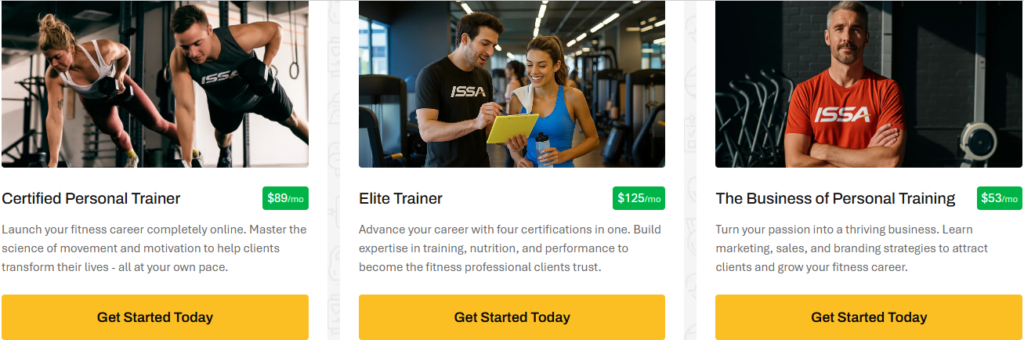
When I started researching online CPT certification options, I did not want to choose too quickly. I wanted a certification institute that was known, structured, and serious enough to give me a strong foundation.
At first, I hesitated between ISSA and NASM. Both are well-known names in the fitness certification world, and both offer online study options for people who need flexibility.
NASM has a strong reputation and is often known for its structured training model. ISSA also felt like an established and recognized choice, but what stood out to me was the learning style, the course bundles, the specializations, and the way it seemed to fit my personal goals.
I read reviews, compared programs, and asked myself: which one actually fits my life, my goals, and the kind of fitness education I want to keep building on?
My choice was not about one being “good” and the other being “bad.” ISSA simply felt more aligned with what I wanted at that time, especially because I was already interested in glute training, women’s fitness, nutrition, and long-term wellness.
Practically, ISSA also made sense for my life. The enrollment process was simple, the course was online and self-paced, and I liked that I could keep learning through future specializations.
As a busy mom with a full schedule, that combination mattered. I was not looking for the easiest route. I was looking for a route I could actually stay consistent with.
In the end, ISSA felt realistic: flexible, structured, online, and serious enough to help me grow.
Is ISSA a Reputable Certification?
In my opinion, yes. ISSA is a respected and reputable certification provider in the fitness industry.
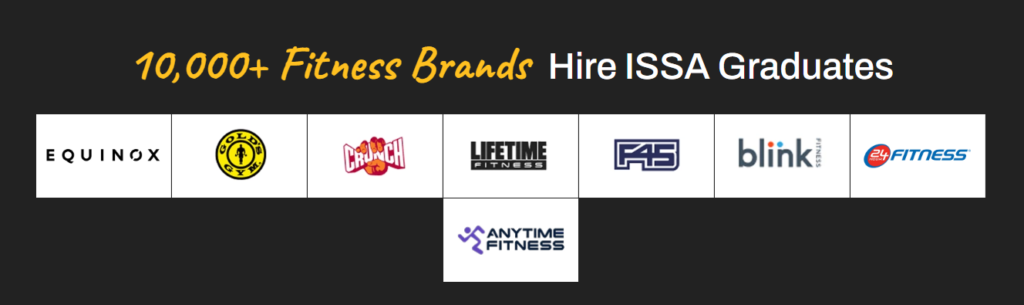
It is not a small unknown course. Many aspiring trainers choose ISSA because it offers a flexible online format, clear study materials, and different options for continuing education. ISSA also states that its certification is recognized by more than 10,000 gym partners across the United States, which says a lot about how established the name is in the industry.
However, there is one important detail to understand.
ISSA offers different exam routes. The standard ISSA CPT exam is open-book and open-note. Some ISSA packages also include or offer access to an NCCA-accredited exam option through NCCPT.
Those two exam routes are not the same.
So before choosing your package, check what is included. Also check what your future employer, gym, or country requires.
This matters if you want to work in a specific gym, studio, or country.
In simple words: ISSA can be a strong certification choice, but you should choose the route that matches your future goals.
What Does the ISSA CPT Curriculum Cover?
The ISSA CPT curriculum is designed to give future trainers a foundation in the body, exercise science, training principles, program design, and client coaching.
The course may vary slightly depending on the package, but the main areas usually include:
- fundamentals of personal training
- anatomy and physiology
- exercise science
- nutrition and exercise
- program design
- resistance training
- cardiovascular training
- flexibility and mobility
- special populations
- injury prevention and recovery
- business and marketing basics
For me, this was one of the reasons the course felt useful. It was not only about learning exercises. It helped me understand why training decisions matter.
Studying anatomy made me pay more attention to muscles and movement. Learning about program design helped me understand why workouts need structure. The sections on recovery, mobility, and special populations also reminded me that personal training should never be one-size-fits-all.
That matters even more if you want to support women, beginners, busy moms, or people who need a more thoughtful approach to fitness.
What Studying Online Looks Like as a Busy Mom
Studying for an online CPT certification while raising three children is not always easy.
Some days, I felt motivated and ready to learn. Other days, I was tired before I even opened the course. That is exactly why the flexibility mattered so much.
I could study early in the morning, in the evening when the kids were in bed, or on weekends when my husband helped more with them.
It was not a perfect routine, but it was a routine I could actually keep.
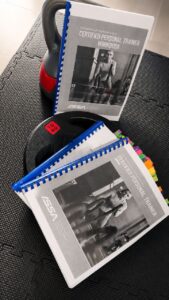
Some days, I studied properly with my notes. Other days, I only reviewed a few pages, watched a short video, or went back over one concept I did not fully understand.
That still counted.
As a mom, you learn to adapt. You do not always get the perfect quiet moment or the perfect schedule, so you build your progress around real life.
The online format worked well for me because I could move at my own pace, revisit the material, and keep going even when life became busy.
Still, flexible does not mean effortless. You need discipline, a strong reason to continue, and the patience to accept that progress may look different from one week to another.
What Felt Challenging
The most challenging part for me was learning all the muscles.
The human body has more than 600 muscles. Yes, more than six hundred.
I already loved fitness. I had a strong interest in strength training, glute work, and movement. But when I reached the deeper anatomy sections, it felt overwhelming at first — and honestly, it is still tricky to know all of them.
There was a lot to remember. But all of this section is necessary if you want to truly understand the body. You cannot coach movement safely without knowing what is actually moving.
That was when I realized something important: loving workouts and understanding the body scientifically are two different things.
But this is also where the growth happens.
Studying to become a Certified Personal Trainer changes the way you look at the body.
You stop seeing exercises as random movements. Instead, you start asking better questions.
Which muscles are working? Is the posture correct? Is the tempo controlled? Is the person moving safely? Is there enough recovery? Is the time under tension appropriate? Is the workout effective, or just intense?
That shift changed the way I looked at training.
The ISSA CPT course helped me understand that fitness is not only about choosing exercises. It is also about form, recovery, progression, safety, and knowing why you are doing what you are doing.
So yes, some parts felt hard.
But those parts also helped me grow.
My Experience Taking the ISSA Exam
Let me be honest: open-book does not mean you can skip studying.
I took the standard ISSA exam, which is open-book. ISSA also offers an NCCA-accredited exam option through NCCPT in some packages, but at that stage, the standard exam matched my goals.
At first, I thought the open-book format would remove most of the pressure. It helped, of course, but I quickly understood something important: if you do not understand the material, the book will not do the work for you.
You still need to understand how the body works, how to structure training, and how to make safe decisions for a client.
So I studied seriously. I reviewed the muscle chapters several times, went back over program design, and made my own notes because writing things in my own words helped me remember better.
My advice if you are preparing for the ISSA exam: do not study just to find answers. Study to understand them.
That is what makes the exam feel less stressful — and it is also what makes the certification more useful.
How ISSA Changed the Way I See Workouts
Before studying, I already loved working out.
The ISSA CPT certification helped me look at workouts with more knowledge and intention.
Now, I pay more attention to posture, tempo, time under tension, recovery, exercise selection, and the way a movement is performed.
I no longer look only at whether a workout burns or feels hard.
That is an important shift.
A workout is not automatically better because it looks intense. A movement is not automatically effective because it is popular online. Progress does not always come from doing more.
Often, it comes from doing things better.
Studying helped me understand why form matters, why recovery matters, and why every person needs an approach that fits their body, goals, and lifestyle.
This is especially important for women, busy moms, beginners, and anyone who wants to train in a strong but sustainable way.
One of the biggest things I gained from ISSA was a deeper respect for the details.
What Came After Passing: Still Learning, Still Growing
Passing the exam did not feel like a finish line.
It felt like a starting point.
I am still studying, still building my foundation, and still going deeper into the areas I care about most: strength training for women, glutes, nutrition, and supporting women through different stages of life.
For now, I help women by sharing what I learn here on the blog and on social media. Bigger projects are slowly building too, but I am focusing on finishing my studies first.
As a busy mom of three, I know it is not always easy to reach everything you want to do. Some seasons, progress is slower than you hoped.
But I am serious about this because I truly love it.
And maybe that is the real lesson: you do not need to do everything at once. You just need to keep showing up for what matters to you, one step at a time.
Who the ISSA Certified Personal Trainer Course May Be Good For
The ISSA Certified Personal Trainer course may be a good fit for people who want a flexible, online way to study fitness and personal training.
It may suit you if:
- you are a busy mom or working adult
- you need to study around family, work, or life responsibilities
- you prefer online learning
- you are self-motivated and can organize your own study time
- you want a respected fitness certification provider
- you like having digital materials, quizzes, and study tools
- you want the option to keep learning through specializations
- you are interested in online coaching, fitness content, or building a wellness brand
- you want to learn for yourself first, then possibly help others later
Who ISSA May Not Suit
Even though ISSA worked well for me, I do not think one certification is perfect for everyone.
ISSA may not be the best fit if:
- you need in-person teaching to stay motivated
- you prefer a classroom environment
- you struggle a lot with self-paced study
- you want live coaching practice as a main part of the course
- your future gym or country requires a different certification or exam route
- you want a fully hands-on learning experience from the beginning
ISSA Recertification: What Happens After You Pass?
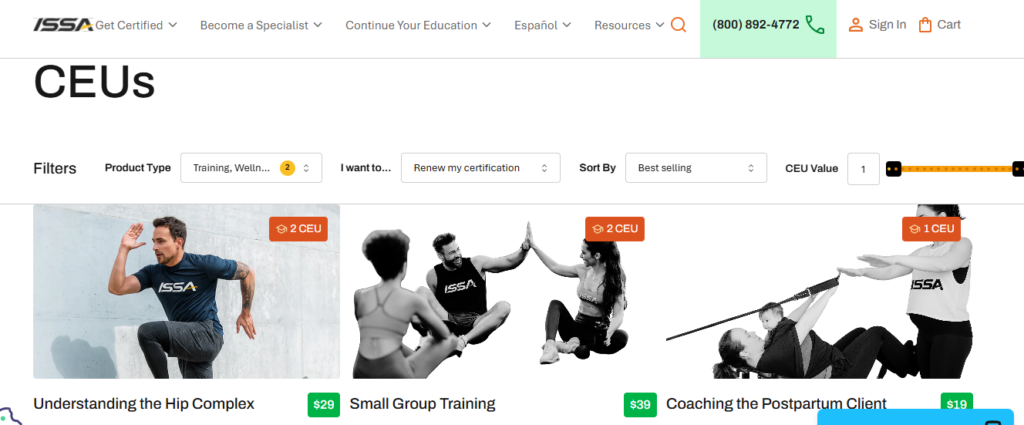
Passing the exam is not the end of the learning process. Like many fitness certifications, ISSA requires trainers to renew their certification. The recertification cycle is every 2 years.
To keep your certification active, you usually need to complete continuing education, keep your CPR/AED certification updated, and follow the renewal process.I actually think this is important. Fitness, health, and exercise science keep evolving. A good trainer should not stop learning after passing one exam. Recertification encourages you to stay updated, keep improving, and continue building your knowledge.
For me, this fits the way I already see wellness. I do not want to study once and stop. I want to keep learning about strength training, women’s health, nutrition, pre/postnatal fitness, gut health, recovery, and sustainable wellness. That is also why ISSA’s continuing education and specialization options interested me. They give you a way to keep building after the CPT instead of treating the certification as the final destination.
How ISSA Recertification Works
In simple words, to maintain your ISSA certification, you generally need to:
- renew every 2 years
- complete the required continuing education
- keep your CPR/AED certification updated
- submit the renewal application and CEU documentation
- pay the renewal fee, unless your situation or package includes another option
Before your renewal date, always check ISSA’s current recertification rules directly, because requirements and fees can change.
ISSA Certified Personal Trainer Review: Pros and Cons
To make this review easier to compare, here are the main pros and cons I noticed.
Pros
- Flexible online study This was the biggest advantage for me. I could study around my children, family schedule, and daily responsibilities.
- Self-paced learning You can move through the material at a rhythm that works for your life. This gives you breathing room, especially if your schedule changes often.
- Good for beginners The structure can help if you are new to formal fitness education and want to build a foundation step by step.
- Useful curriculum for beginners The ISSA CPT curriculum covers important areas like anatomy, exercise science, program design, resistance training, cardio, mobility, injury prevention, and business basics.
- Different learning tools Depending on the package, ISSA offers digital materials, quizzes, video/audio lectures, and study support.
- Exam options ISSA offers two exam routes, which is actually a plus — you can choose the one that fits your goals. Just make sure you know which option your package includes.
- Specializations and continuing education ISSA has many courses beyond CPT. This is useful if you want to keep growing after your first certification.
- A large gym network in the U.S. ISSA states that its certification is recognized by over 10,000 gym partners nationwide. If you plan to work in the United States, that is a real practical advantage, because it makes ISSA one of the most recognized certification names there.
- Clear path for continuing education ISSA requires recertification every 2 years, which means you need to keep learning and stay updated. This can be a positive thing if you want to grow seriously in the fitness industry.
- Payment options ISSA often offers promotions and payment plans. Always check the current offer before enrolling.
- Spanish-language options Some ISSA courses are available in Spanish, which can be helpful for Spanish-speaking students.
- Military support ISSA offers military-related funding and support options for eligible service members and spouses.
Cons
- You need self-discipline Because the course is online and self-paced, you have to organize yourself.
- Some topics can feel overwhelming For me, anatomy and learning all the muscles felt like a lot at first.
- Online learning may not suit everyone Some students learn better in person, with live practice or classroom structure.
- Recognition can vary Some countries, gyms, or employers may ask for local registration, CPR/First Aid, practical assessment, or a specific exam route.
- Not every package includes the same benefits Live sessions, CPR/AED, specializations, printed books, or exam options may depend on your package, so check exactly what is included before you enroll.
- Recertification requires ongoing effort Renewing your certification every 2 years means you need to complete CEUs, keep CPR/AED updated, and follow the renewal process. This is good for professional growth, but it is still something to plan for.
My Honest Verdict: Is the ISSA CPT Certification Worth It?
For me, yes — the ISSA CPT certification has been worth it. Not because it makes everything easy. Not because online study requires no effort. But because it gave me a flexible, structured, and credible way to study personal training while still living my real life as a mom of three.
I chose ISSA because it fit my season of life, my goals, and the kind of wellness work I want to build. At first, I wanted to learn for myself, my family, and my friends. Later, I realized this knowledge could also help me become more useful to women through my blog, Instagram page, and future projects.
Still, I want to be honest. Before choosing ISSA, NASM, ACE, or any other CPT certification, check what your future employer or country requires.
The best certification is not only the one that sounds good online. It is the one that fits your goals, your learning style, and the place where you want to work.
For me, ISSA gave me what I needed: structure, flexibility, and a path to keep growing.
Final Thoughts: Becoming a Certified Personal Trainer Is About More Than a Certificate
For me, becoming a Certified Personal Trainer is about much more than earning a title. It is about becoming someone who can help women feel stronger, safer, and more confident in their bodies. The real point is understanding movement better and learning how to train with purpose instead of guessing.
The ISSA CPT certification has been part of that journey for me. As a busy mom of three, I needed a course that respected my schedule but still gave me structure. I needed something flexible, but not empty. Something online, but still organized. That is why ISSA felt like the right choice for this season.
If you are considering becoming a certified personal trainer online, my advice is simple: do your research, compare your options, think about your lifestyle, and choose the path you can truly commit to.
Because the certificate matters. But the person you become while studying matters even more.You do not need a perfect schedule to begin. You need a strong reason, a realistic plan, and the courage to keep showing up.
To check the latest course details, packages, prices, and exam options, visit their official website: issaonline.com
You can also join me on Instagram, where I share more about women’s strength, fitness, healthy habits, and my journey as I keep learning and building: @healthyhabitsexplorer
I also love learning from other women who are building their own path in fitness. One example is Kari Martinez, who also studied with ISSA and became an ISSA Certified Personal Trainer and CNC. Her story is a beautiful reminder that strength is built through discipline, balance, and consistency. You can read her HerStory feature here: meet Kari Martinez, strength built on discipline and balance.
**The information shared in this article is based on my personal experience as an ISSA student and is not career, legal, or financial advice. Certification requirements, exam options, packages, and prices can change, so always verify the current details directly with ISSA and with the employer, gym, or country where you plan to work before enrolling.