
Why Recovery Deserves as Much Attention as Training
We talk a lot about workouts, programs, and progress — but real results don’t come from training alone.
They come from what happens after.
When I began training with a stronger focus on glute and lower-body development, I quickly realised how much recovery shapes consistency. Soreness wasn’t just uncomfortable — it influenced how freely I moved, how confident I felt returning to heavy lifts, and how often I could train without hesitation.
Stretching helped. Mobility helped.
But deep muscle tension would still linger longer than it should.
That’s when I introduced the Theragun into my routine — not as a shortcut, but as a supportive tool to help my body recover more intentionally between sessions. Over time, recovery stopped feeling random. It became structured, proactive, and sustainable.
Recovery Is a System, Not a Single Tool
Before diving into devices, it’s important to say this clearly:
there are many effective ways to support recovery — and they work best together.
True recovery is built on a few essential pillars:
-
Sleep: The most powerful recovery tool of all. Deep sleep is when muscle repair, hormone regulation, and nervous system recovery happen. No device can replace it.
-
Nutrition & hydration: Adequate protein, micronutrients, and fluids give muscles what they need to rebuild efficiently.
-
Mobility & stretching: Keeps joints healthy and fascia supple.
-
Stress management: Chronic stress slows recovery just as much as overtraining.
-
Manual recovery methods: Foam rolling, massage, sauna sessions, or cold exposure can all play a role.
The challenge? Not all of these are accessible or realistic every day.
If recovery has been challenging due to pain, setbacks, or long breaks from training, you may also find value in my article “When Injury Feels Like a Full Stop: How to Turn a Setback into Your Comeback,” where I share a safe, realistic approach to rebuilding strength without rushing the process.
This is where the Theragun fits in — not as a replacement for good habits, but as a practical way to enhance recovery at home, even on busy days when time and energy are limited.
What the Theragun Actually Does
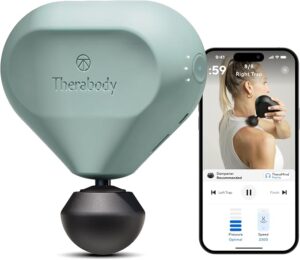
Unlike basic vibration massagers, the Theragun uses percussive therapy — controlled, rhythmic pulses that reach deeper layers of muscle tissue.
This type of stimulation helps to:
-
Release deep-seated tension and knots
-
Increase local blood flow
-
Reduce post-workout stiffness
-
Improve mobility and movement quality
The effect isn’t dramatic or instant.
It’s subtle, functional, and cumulative — muscles feel less “locked,” movement feels smoother, and recovery becomes easier to manage over time.
How It Fits Into My Routine
I use the Theragun most often:
-
After glute and leg sessions (hip thrusts, RDLs, lunges, split squats)
-
Before mobility work, especially for hips and hamstrings
-
On rest days, as gentle active recovery
-
After long hours of sitting, when hips and lower back feel tight
What I notice most isn’t just reduced soreness — it’s better readiness. My body feels prepared for the next session instead of still catching up from the previous one.
The Model I Personally Use
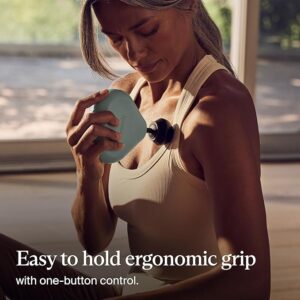
I personally use the Theragun Mini, and I’m genuinely very happy with it.
Its compact size makes it easy to use consistently, yet it still delivers surprisingly deep relief — especially after glute and lower-body sessions.
For anyone who wants an effective, no-fuss option without the bulk of larger models, the Mini is more than enough. It’s the one I naturally reach for most often, and it proves that you don’t need the biggest or most expensive device to support good recovery.
The Therabody App: Guided, Targeted Recovery
One of the most underrated aspects of the Theragun is the Therabody App.
It doesn’t just connect to the device — it turns recovery into a guided experience.
Inside the app, you’ll find structured programs designed for specific body parts and goals, rather than generic instructions. Routines are organised by targeted areas such as glutes, hamstrings, quads, calves, hips, lower back, shoulders, and neck.
There are also programs tailored to different moments:
-
Post-workout recovery (lower body, upper body, or full body)
-
Warm-ups before training or mobility sessions
-
Daily tension relief for non-training days
-
Evening routines designed to calm the nervous system and support sleep
After a glute-focused workout, for example, the app may guide you through a short routine targeting the glutes, hamstrings, and lower back, with:
-
Clear visuals showing exactly where to place the device
-
Suggested attachments for each muscle group
-
Timed guidance to avoid overuse
-
A realistic 5–15-minute structure that fits busy schedules
This matters more than it seems.
Many women know recovery is important — but don’t always know how to do it effectively. The app replaces guesswork with clarity, structure, and consistency, making recovery something you can actually follow.
Pricing: What to Expect
| Model | Best For | Approx. Price (USD) |
|---|---|---|
| Theragun Mini | Compact, everyday use | ~$199 |
| Theragun Prime | Regular training recovery | ~$299 |
| Theragun Elite | Quiet, high performance | ~$399 |
| Theragun Pro | Advanced users | ~$599 |
Yes, it’s an investment.
But compared to repeated massage or physio sessions, it can make sense long-term.
Cheaper massage guns often provide surface-level vibration that feels pleasant but doesn’t address deeper tension. The Theragun’s consistency and amplitude are what make the difference over time.
Benefits I’ve Personally Noticed
-
Faster recovery between workouts, especially after glute-heavy days
-
Improved mobility around hips and hamstrings
-
Less next-day stiffness in glutes and lower back
-
Relief beyond workouts, including long workdays or travel
-
Greater consistency, because recovery no longer feels optional
How I Use It (Simply)
-
Choose the appropriate attachment
-
Glide gently for 1–2 minutes per muscle group
-
Avoid aggressive pressure — let the device do the work
-
Pair with stretching or mobility
-
Use consistently, not excessively
Pros & Cons
✅ Pros
-
Deep, effective muscle relief
-
Guided routines through the app
-
Premium build quality and quiet motor
-
Useful both before and after training
-
Reduces reliance on external treatments
❌ Cons
-
Higher price point
-
Can feel intense at first
-
Larger models are slightly heavier
-
Benefits build gradually with regular use
Who It’s Best For
-
Women who strength train regularly
-
Anyone dealing with tight hips, glutes, or lower-body stiffness
-
Busy schedules that limit time for recovery
-
Those who already value sleep, nutrition, and mobility
Theragun vs Other Recovery Methods
Foam rolling, stretching, sauna sessions, and cold exposure all have value.
The Theragun stands out because it offers deep, targeted relief in minutes, without setup, appointments, or recovery days.
It’s convenience paired with effectiveness — and that matters when life is full.
Final Thoughts
The Theragun isn’t a quick fix. It’s a supportive recovery tool that works best alongside good sleep, nourishing food, hydration, and smart training.
For women who train consistently and want to move well long-term, it helps turn recovery into a habit rather than an afterthought.
Because progress isn’t built only in the gym.
It’s built in the care you give your body between sessions.
** This content is for educational purposes only and is not intended as medical advice. Always consult a qualified healthcare provider before using new recovery tools or therapies.