Trying to fit exercise into a life full of work, children, school runs, meals, housework, mental load, and constant interruptions can feel overwhelming. For many mums, it is not that they do not care about their health. It is that by the time the day slows down, there is barely any time or energy left.
That is why so many mums end up asking themselves the same question: How do busy mums fit regular exercise around work and family?
The honest answer is often much simpler than people expect. It is learning how to make movement part of real life, even when life feels busy, messy, and far from perfect.
For most women, regular exercise becomes sustainable when it stops feeling like a huge project and starts becoming something simpler, more flexible, and easier to repeat from week to week.
Why It Can Feel So Difficult
Motherhood changes more than your daily routine. It affects your sleep, your energy, your stress levels, your priorities, and often the way you feel in your own body too.
Even when you want to exercise, there are real obstacles in the way, such as lack of time, broken sleep, low energy, childcare limitations, guilt about taking time for yourself, not always knowing what to do, or feeling like short workouts are not worth it.
I have been there, and honestly, it still happens. There are days when I feel tired, behind on everything, and tempted to put myself last. I know how hard it can be to make exercise happen when life feels full. But I also try to stick to my routine and take care of myself, because our children need a mother who is healthy, strong, and full of energy. And sometimes, we have to remind ourselves that our health matters too, even when life is busy and it does not look perfect.
A lot of mums think exercise only counts if it looks impressive. A full gym session. A long workout. A perfect weekly routine.
But that way of thinking often makes consistency harder, not easier.
When You Have a Baby, It Can Feel Even Harder
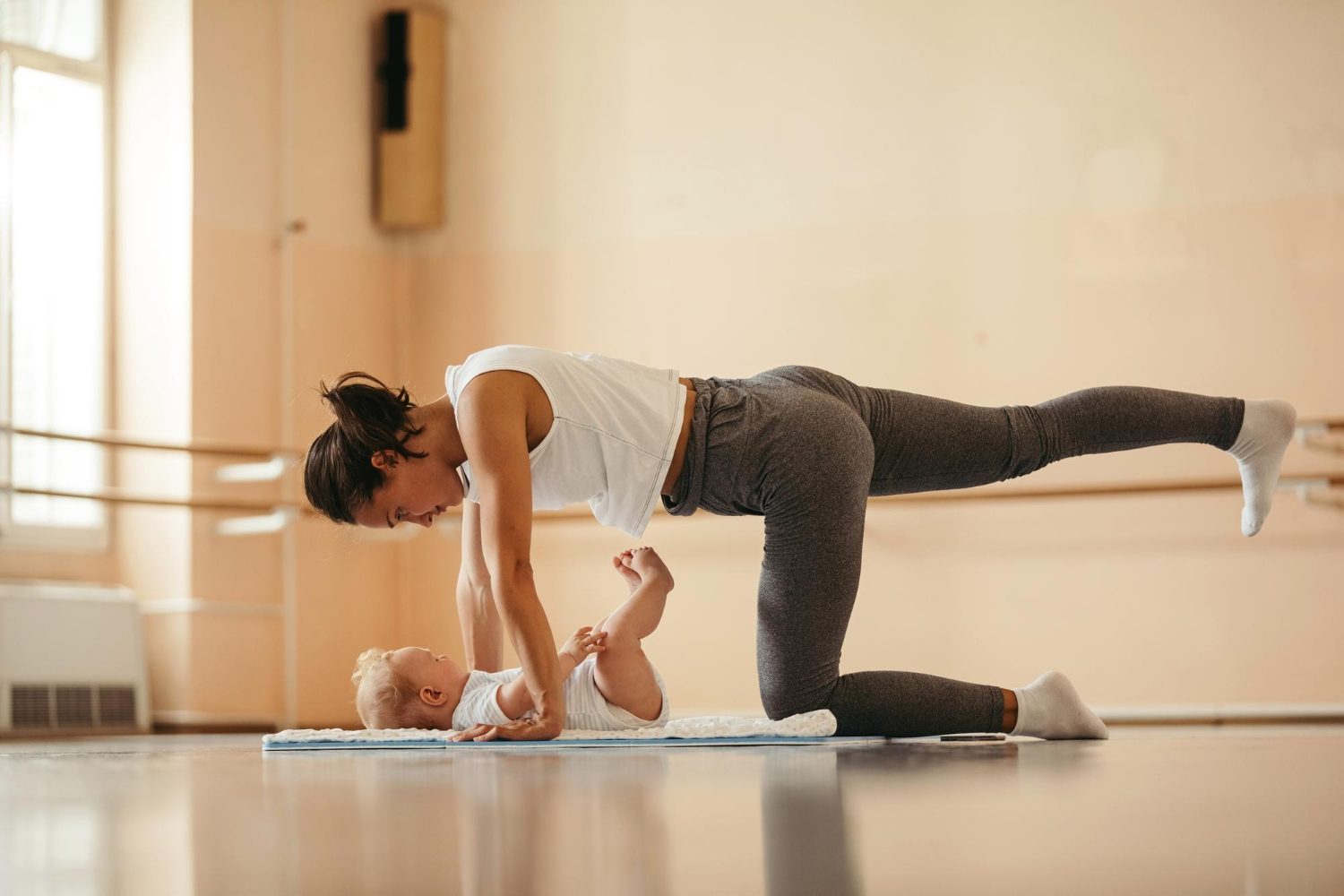
For mums with babies, exercise can feel especially hard to fit in.
Sometimes you have a baby who cries a lot, wants to stay in your arms, or only settles when you are holding them. I have been there too. My first child had GERD, so I know how intense and exhausting that stage can be.
And for breastfeeding mums, I know it is not always easy either. Sometimes people say, “Just ask someone to help with the baby,” but it is not always that simple when your baby needs you so often.
If that is your reality right now, I want you to know this: the tiny bits of exercise you manage to do in a week are still better than doing nothing at all.
Sometimes we think we will never have time, but a little movement can still be possible with flexibility and realistic expectations.
If you are not a solo mum and someone can hold the baby for even 10 or 15 minutes, that can already be enough for a short workout, some stretching, a quick HIIT session, or a walk.
You can also use nap time when possible. And yes, I know some mums will say, “My baby does not sleep much,” or “My baby only sleeps in my arms.” I understand that too.
In that case, one option can be going for a walk outside with your baby sleeping in the stroller. Maybe that is not your ideal routine. Maybe you would prefer your baby to nap in bed. But sometimes motherhood asks us to adapt, especially in the early months.
You can also plan one short workout on the weekend if your husband, your mum, or another trusted family member can stay with the baby for a little while.
And for mums who are no longer in the baby stage but are still juggling a lot, like bigger kids, school pick-ups, work, after-school activities, or the constant demands of running a home, I know it is not easy either.
But it is still worth asking yourself one honest question: Where in my day or week could I realistically free up 10, 15, or 20 minutes for movement?
It might be before the kids wake up, during school hours, during nap time, during a stroller walk, or on the weekend. It still counts, even if it looks different from what you imagined.
A Realistic Routine Will Always Beat an Unrealistic One
One of the most helpful mindset shifts is this: stop asking what the ideal routine would be, and start asking what you can actually keep doing.
That might mean two strength sessions a week and a few walks. It might mean Pilates on some days, strength training on others, and just trying to hit 7,000 steps when life is full. For some mums, it means a proper gym session. For others, it means a mat on the floor, a resistance band, and 15 quiet minutes before the house wakes up.
The routine that works is usually the one you can keep coming back to.
Do Short Workouts Really Help?
Yes, they do.
A focused 10-, 15-, or 20-minute workout can still support strength, energy, mood, mobility, and consistency. More importantly, it keeps you connected to the habit of taking care of yourself.
That matters more than many mums realise, especially when it helps you stay connected to the habit instead of giving up altogether.
Short sessions can also be a smart entry point when you are tired, postpartum, overwhelmed, or rebuilding your routine after a long break. In those moments, pushing harder is not always the answer. Sometimes a more flexible approach works better, and that is exactly why The Smart Way to Train When You’re Tired, Overwhelmed, or Recovering speaks to so many women.
The Most Important Thing Is to Keep Moving
At the end of the day, the most important thing is to move your body regularly. It does not have to look the same for every mum. For one woman, that might be Pilates. For another, it might be strength training. For someone else, it might be a mix of both, along with walking more and aiming for 7,000 steps or more across the day.
Sometimes it might even be the exercise snacking method, which simply means fitting in short bursts of movement whenever you can. A few squats in the kitchen, a quick set of lunges, a short walk, a few minutes of stretching, or a quick core session while the baby naps can all add up more than you think.
What matters most is consistency. When you keep moving your body, even in small ways, you still get real benefits. You support your energy, your strength, your mood, your mobility, and your long-term health.
You do not need to do everything at once. Start with what you enjoy, what feels manageable, and what actually fits your life and schedule. Then build from there, step by step.
And yes, there will be days when motivation is not there. That is normal. In those moments, the goal is not to feel inspired. It is to adapt, do what you can, and keep showing up in some way. Consistency will always take you further than waiting for the perfect mood, the perfect week, or the perfect routine.
What Kind of Exercise Works Best for Busy Mums?
The best kind of exercise is usually the one that feels realistic in your current life.
Walking

Walking is simple, flexible, and often much easier to keep up with than a more structured fitness plan. It can help with energy, stress, circulation, heart health, and your daily step count, all without feeling too demanding.
You can fit it in after school drop-off, during a lunch break, with a stroller, after dinner, or while listening to a podcast or taking a phone call.
And honestly, if walking is the easiest kind of movement for your life right now, that is more than enough reason to take it seriously.
For some mums, even a simple treadmill or walking pad at home can make a real difference. It can help you move more, get your steps in, and stay active when the weather is too hot, the baby is nearby, or leaving the house feels like too much. If you want more ideas on how cardio can support heart health, stamina, fat loss, and everyday energy, read my article Cardio for Women: A Complete Beginner’s Guide to Heart-Healthy Fitness, Fat Loss & Everyday Energy.
Strength Training
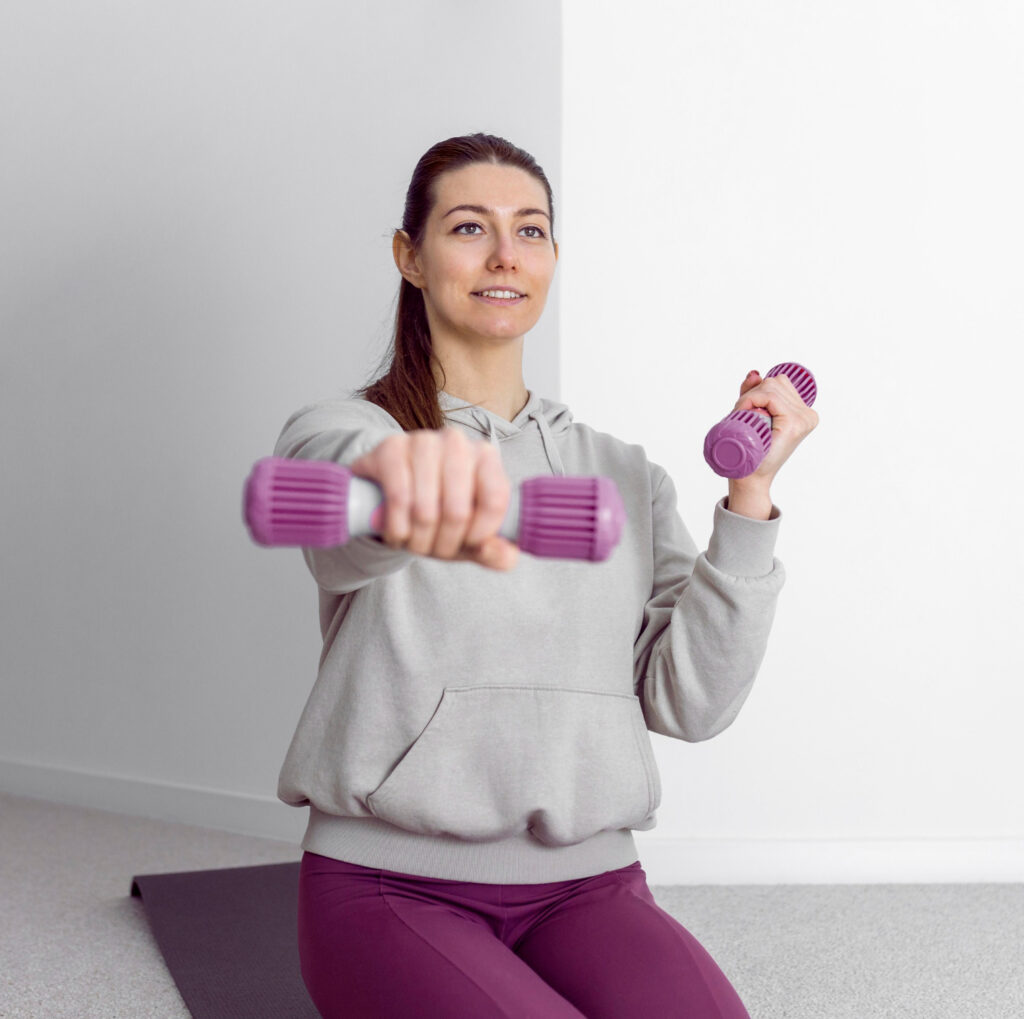
Strength training is one of the most valuable forms of exercise for women. It helps support muscle, posture, bone health, metabolism, confidence, and everyday function. It can make daily life feel easier too, whether that means carrying a baby, lifting groceries, moving with more ease, or simply feeling stronger in your own body.
It can be very simple. A dumbbell workout at home, bodyweight exercises in the living room, resistance band training, or two or three short sessions a week can already make a real difference.
If your goal is to build stronger legs and make lower-body training feel less confusing, The 6 Best Quad Exercises for Strong, Sculpted Legs (Gym & Home Versions) gives practical ideas you can actually use.
And strength training is not only about physical results. For mums who feel mentally overloaded, foggy, or emotionally drained, it can also support confidence, resilience, and sharper focus. If you want to understand that side of it more, read my article Stronger Muscles, Sharper Mind: How Strength Training Rewires the Female Brain.
HIIT and Tabata for Very Busy Days
For mums with very limited time, quick HIIT or Tabata-style sessions can be useful too.
These workouts are not necessary for everyone, and they do not need to be done every day. But when time is tight, they can be a practical option.
A quick HIIT workout or Tabata session can be useful when you want something short, effective, and easy to fit into a busy day. For some mums, it is simply a practical way to get moving when there is not much time.
Mobility and Pelvic Floor Work
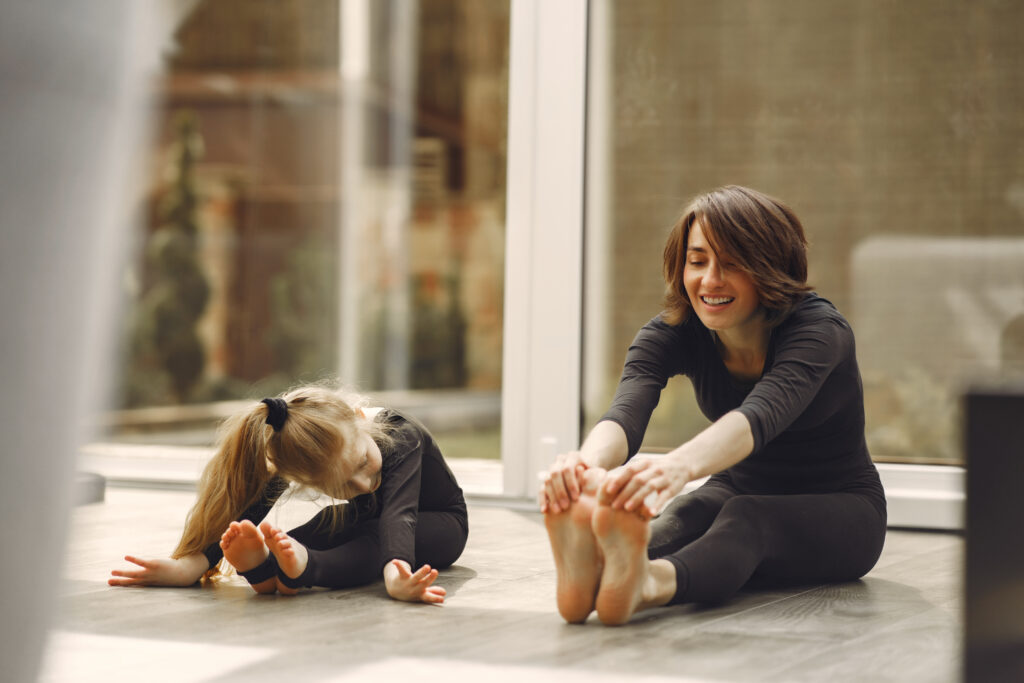
Many mums carry tension in the neck, shoulders, hips, back, and pelvic area from pregnancy, feeding, carrying children, poor sleep, stress, or sitting too much.
That is why mobility and pelvic floor work deserve a place in a realistic routine too.
Mobility work can help you feel less stiff and more comfortable in your body day to day. Pelvic floor work can support recovery, bladder control, core strength, and confidence, especially after pregnancy and birth. If this is an area you want to work on more consistently, read my article Kegel Exercises for Women: Strengthen Your Pelvic Floor Every Day for Confidence & Control.
Keeping the Same Routine Can Help More Than Constantly Changing It
One mistake many women make is changing their workouts all the time because they think they need constant variety to make progress.
But for busy mums, there is often more value in keeping a familiar routine for a while.
When you repeat the same structure each week, you spend less mental energy deciding what to do. You also build confidence faster because the movements become more familiar. That can make it much easier to stay consistent.
You do not need a brand-new workout plan every Monday. Very often, the results come from repeating simple things long enough for them to actually work.
How Busy Mums Can Actually Make Exercise Happen
In real life, things usually work better when you keep them simple.
If exercise is something you hope to fit in later, it often gets pushed aside. That is why it helps to think ahead a little and decide which days you want to move, what kind of movement you want to do, and what time of day feels most realistic.
For example, your week might look like this:
Option 1
- Monday: 20-minute strength workout
- Wednesday: walk after drop-off
- Friday: lower-body session
- Sunday: family walk or short home workout
Option 2
- Tuesday: 10-minute Pilates session before the kids wake up
- Thursday: treadmill walk or outdoor stroller walk
- Saturday: 25-minute full-body workout at home
- Throughout the week: a few short movement breaks when time is tight
Think of it as a loose plan, not something you have to follow perfectly.
You may not have an uninterrupted hour, and that is fine. A lot of mums stay active by using smaller windows of time, like 15 minutes before the school run, 20 minutes during nap time, 10 minutes after bedtime, or half an hour on a weekend morning. A routine built around your real life is always more useful than one built around fantasy.
It also helps to keep things easy to start. For many mums, a mat, resistance bands, a pair of dumbbells, and maybe a treadmill or walking pad are more than enough to create a strong routine at home.
Sometimes the hardest part is not exercising. It is knowing what to do. That is why app-based workouts can be so useful, especially for beginners or mums with a full mental load. A good app can save time, reduce overthinking, and give you structure when you do not have the energy to build a plan from scratch. If you want something guided and realistic, My One-Year Journey with the WeRise App by Senada Greca gives a personal look at how app-based training can fit into real life. And if your focus is lower-body strength or glute growth, Is Mia Lauren Green’s Gain Lower Body Program on the Evolve You App Worth It? My 1-Year Results may give you a better idea of whether that style of programme could work for you.
For some women, having support makes all the difference. That could be an online coach, a coach who comes to your home, or even a trainer who helps you build a simple routine you can follow on your own. This can be especially helpful if you are postpartum, returning to exercise after a long break, or feeling unsure where to start.
Others find it easier to stay consistent when they have something small to work toward. A core challenge, a step goal, or a simple routine you can add into your week can help create momentum. Something like Your 30-Day Summer Plank Challenge: Strengthen Your Core, Support Your Body and Feel Empowered can be a nice way to add consistency without making your routine feel overwhelming.
And because many mums are under-slept, mentally overloaded, and sometimes hormonally depleted too, exercise should support your body, not constantly drain it. A smarter way of training can help protect your energy, support recovery, and make your routine feel much more sustainable over time. If you want to understand that better, read my article Women’s Hormones & Workouts: The Smart Way to Train for Balance, Energy & Results.
The Guilt Part Is Real
A lot of women feel selfish for taking time to exercise. There is always something else that seems more urgent. Someone needs something. A task is unfinished. The baby is crying. The laundry is there. Dinner is not ready.
And because mums are so used to responding to everyone else, taking even 20 minutes for themselves can feel uncomfortable.
But looking after your body is not selfish. It is part of how you keep going.
Exercise is not only about appearance. It can support your energy, mood, stress levels, sleep, strength, confidence, and long-term health. It can help you feel more like yourself again, especially during times when you feel stretched thin.
And children notice more than we think. They may not care whether you did a perfect workout, but they do benefit from having a mother who feels stronger, steadier, and a little more supported in herself. That kind of steadiness matters more than a perfect routine ever will.
In Real Life, This Is What It Looks Like
So how do busy mums fit regular exercise around work and family?
Usually by keeping it practical.
They stop waiting for the perfect week.
They use the little pockets of time they do have.
They walk more.
They fit in short workouts.
They adapt when plans change.
And they keep going, even when motivation is low.
For one mum, that might be two strength sessions a week and a few walks.
For another, it might be Pilates, treadmill walks, and a bit of exercise snacking through the day.
For someone else, it might be one weekend workout and a few 10-minute sessions when possible.
It does not all have to look the same.
What matters is that you keep moving, keep adjusting, and keep choosing something that fits your life. Start with what feels manageable. Build from there. Over time, those small efforts can turn into a routine that feels natural instead of forced.
Has Fitness Inspired You to Help Other Women?
Sometimes, building your own fitness routine can inspire you to learn more and help other women feel stronger too. If becoming a personal trainer is something you have considered, you can read my honest ISSA Certified Personal Trainer review. I share what the online course, studying process, and exam were really like as a busy mum of three.
**This article is for educational purposes only and is not intended as medical advice. Always consult a qualified healthcare provider before starting a new exercise routine, especially if you are pregnant, postpartum, breastfeeding, injured, or managing a health condition.