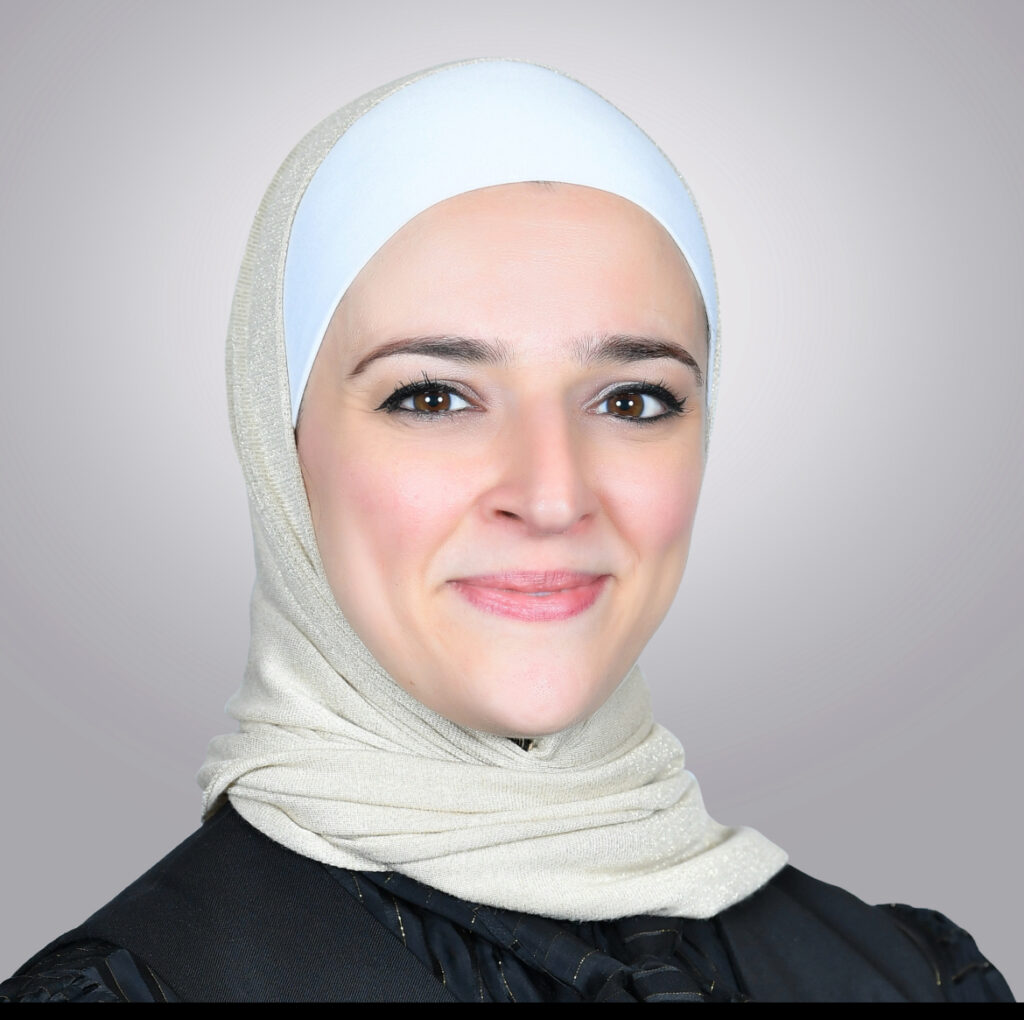
Aya Hajjar’s journey into strength is not a straight line — it is a story shaped by discipline, curiosity, and rebuilding.
By profession, she has spent more than two decades in business management and currently works as an Office Manager at Abu Dhabi Investment Council. Alongside that corporate career, she developed another path rooted in movement science, becoming a Level 4 Personal Trainer, corrective exercise specialist, and biomechanics-focused coach. Today, her work spans corporate wellness, group training, and one-to-one coaching, with a strong focus on postural correction, rehabilitation, and helping her clients build strength intelligently.
Her relationship with fitness evolved through years of study, training, competition, and real-life experience. At one point, she competed in CrossFit, ranking as the third fittest female athlete in her country — a milestone that reflected both discipline and determination.
Then everything shifted.
A spinal fusion surgery at L5–S1 forced her to rebuild her relationship with movement from the ground up — relearning strength with greater awareness, patience, and precision. That experience would ultimately shape the philosophy she now shares with the men and women she coaches.
Her message is simple but powerful:
Invest in your health as if your future depends on it, because it does.
What does a typical week look like for you when it comes to your routines, movement, and daily habits?
My week begins before it begins. I plan meals, family schedules, client programs, and training sessions over the weekend. Structure allows me to balance corporate leadership, motherhood, and coaching. I train early in the morning, before the world becomes loud. Strength training, mobility work, and aerobic conditioning are staples. During the week, it’s execution mode: office responsibilities, family time, and coaching sessions. And every week, I study. Whether it’s research, biomechanics, or a client case, continuous learning is part of my identity.
What movement issues do you see most in women today?
Modern life creates predictable imbalances:
- Forward head posture from screens
- Rib flare and shallow breathing
- Anterior pelvic tilt from prolonged sitting
- Underactive glutes
- Neck and shoulder tension
The body adapts to repetition. Carry your bag on one side long enough, and asymmetry becomes normal.
But adaptation works both ways.
Through postural analysis, reassessment every 4–6 weeks, and structured strength programming, we can restore alignment and distribute load properly again.
Getting stronger isn’t just adding weight, it’s improving movement quality.
What do women often overlook when trying to get stronger?
They chase intensity before mastering mechanics.
Strength begins with pattern integrity, hinging correctly, stabilizing the core, pulling as much as pushing. When foundational mechanics are ignored, compensation replaces strength.
Real strength is built, not rushed.
How do you approach pre- and postnatal training?
Women’s physiology is dynamic. Hormonal fluctuations, structural shifts, and energy variability mean no two phases look the same.
During pre- and postnatal stages, the focus shifts toward:
- Core canister alignment
- Pelvic floor coordination
- Controlled intra-abdominal pressure
- Gradual progression
It’s less about performance, more about restoring integrity.
As a cancer exercise specialist, what inspired you to pursue this certification, and what does this work mean to you personally?
When my husband underwent surgery for a benign brain tumor, and after my own spinal fusion, I discovered a gap.
You can be medically cleared, yet not functionally ready.
There is a fragile space between being a patient and being independent again. That space requires guidance.
This realization led me to pursue cancer exercise specialization. Training during or after cancer treatment is never one-size-fits-all. It is guided by medical parameters, fatigue levels, medication effects, and emotional readiness.
I always err on the side of caution.
What do you wish more women understood about exercise during or after cancer — and what gives you hope in this area of your work?
What I want women to understand is this: your body is not failing you. It is adapting. Progress may look different now, but it is still possible.
Every small milestone matters.
You’ve spoken about rebuilding movement in the space between pain, life, and performance — and about the role of prehab, including for injury and medical recovery. What guidance would you give to women who are currently in that rebuilding phase and trying to return to confident movement safely?
When rebuilding after injury, think in pieces.
Large movements are simply small components assembled together. Master each piece, then layer complexity.
Pain-free does not mean healed. If underlying mechanics aren’t corrected, dysfunction returns.
I strongly believe in collaboration between medical professionals and fitness specialists to bridge this recovery gap.
As a mother yourself, how has motherhood influenced the way you approach training, recovery, and expectations for women?
As a mother of two boys, now 19 and 15, I understand the weight modern women carry.
Expectations are high. Schedules are full. Capacity is not unlimited.
For busy women and mothers who feel disconnected from their bodies, where is the best place to start again?
Start small. Choose sustainability over perfection. Strength training is not about burning calories, it is about preserving function.
And importantly: communicate to your family that your training time matters. When they see you prioritize health, they learn to do the same.
What advice would you give to women who want to stay active and train wisely during Ramadan while honoring their faith and energy levels?
I have trained every Ramadan for years.
Energy drops. Sleep shifts. Hydration becomes strategic.
But Ramadan is not a pause, it is an adjustment.
Reduce volume. Maintain strength stimulus. Keep daily movement steady. Prioritize hydration and nutrient quality.
Often, it is not fasting that changes body composition, it is the shift in habits.
Discipline during Ramadan often leads to renewed strength afterward.
From your experience, what do women most misunderstand about building real strength — and what mindset shift helps them train more consistently and with less pressure?
Women often fear that lifting heavier weights will make them bulky.
In reality, strength training improves bone density, metabolic health, posture, and longevity.
Cardio has its place, but strength builds the foundation.
Your body is unique. Your training should be structured accordingly.
Consistency comes from identity, not motivation.
What is one client transformation or breakthrough that made you especially proud — and that could serve as encouragement for other women starting or rebuilding their fitness journey?
Some transformations are quiet.
A woman who can change a water bottle without assistance.
A client who reduces chronic neck pain.
A 52-year-old who runs her first marathon.
A mother who lifts her baby pain-free.
These moments are profound. Each story is different, and each is equally powerful.
Before we close, a few quieter details about the woman behind the coach, the athlete, and the strength she embodies.
Beyond movement and coaching, who are you — and what do you enjoy most when you’re not training?
Beyond movement, I am a lifelong student. I love reading, and studying.
Looking ahead, what are you most excited to explore, create, or grow?
Looking ahead, I hope to build a structured method that makes intelligent, corrective strength training accessible to more women.
A lighter one to close — what helps you personally reset and recharge during demanding seasons of life?
I reset through family time, short travel breaks, and moments of stillness.
Because even strength needs recovery.
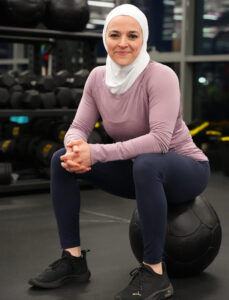
Connect with Aya Hajjar
If you’d like to follow her journey or learn more about her work, you can find her here:
 Instagram: