Kobusinge Diana did not begin running to become an ultramarathoner. She began running to breathe.
A lawyer by profession and fitness creator from Rwanda, Diana found her way to endurance sports in 2021 during lockdown. At the time, she was navigating law school while carrying the weight of a deeply traumatic experience — she had been the victim of sexual assault, which left her very depressed.
With gyms closed and daily structure removed, she began taking light jogs simply to cope and clear her mind. Running became more than movement; it became a way to rebuild herself, step by step.
What began as relief slowly became routine.
Routine became discipline.
And discipline evolved into something stronger.
In 2025, she signed up for her first ultramarathon — driven, as she describes it, by a hunger to push beyond her limits and to do hard things.
For Diana, endurance running is not just physical. It offers a meditative rhythm, a steady connection to nature, and the quiet satisfaction of discovering strength where doubt once lived.
Sharing her training publicly added another dimension. By documenting progress, setbacks, and milestones, she built accountability for herself and created community for other women watching — women who might be wondering if they, too, could begin.
At the heart of her approach is one belief:
Nothing beats finishing a run you once doubted you could finish.
And for Diana, that sentence goes far beyond sport.
What pulled you into ultra distances — and what was that first ultra experience like?
The urge to push beyond my limits and to do hard things is what pulled me into ultra distances.
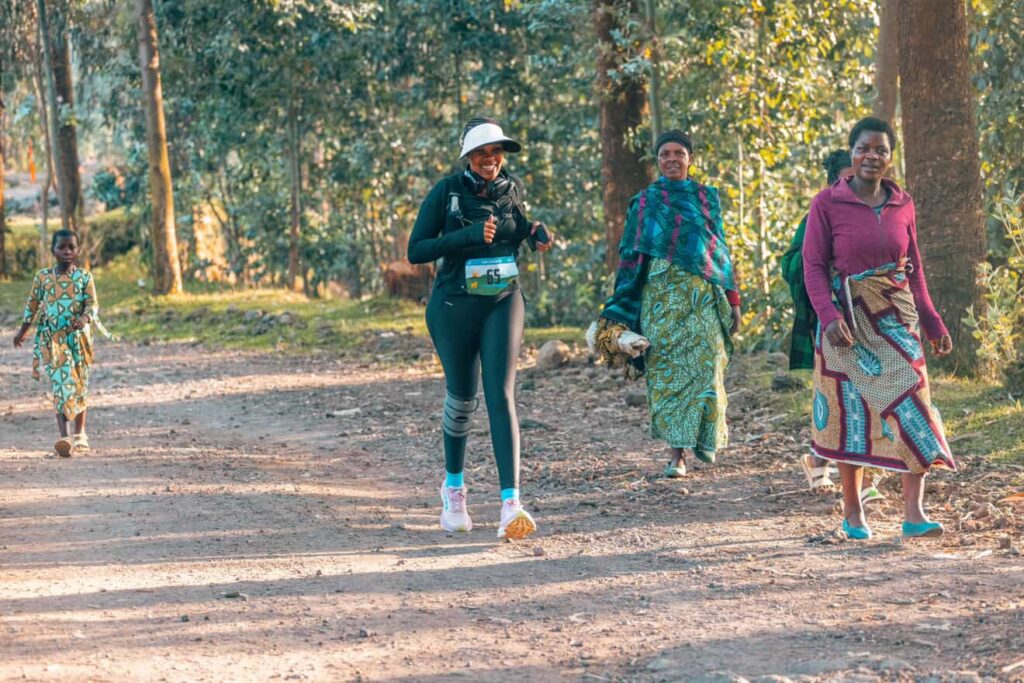
My first ultra experience was actually more fun than I anticipated. It was a trail run, so I paced myself. My goal was to finish the race, so I wasn’t under pressure to chase a personal best. I took time to enjoy the beautiful scenery, and the weather was good — not too hot.
What running or endurance achievement are you most proud of so far?
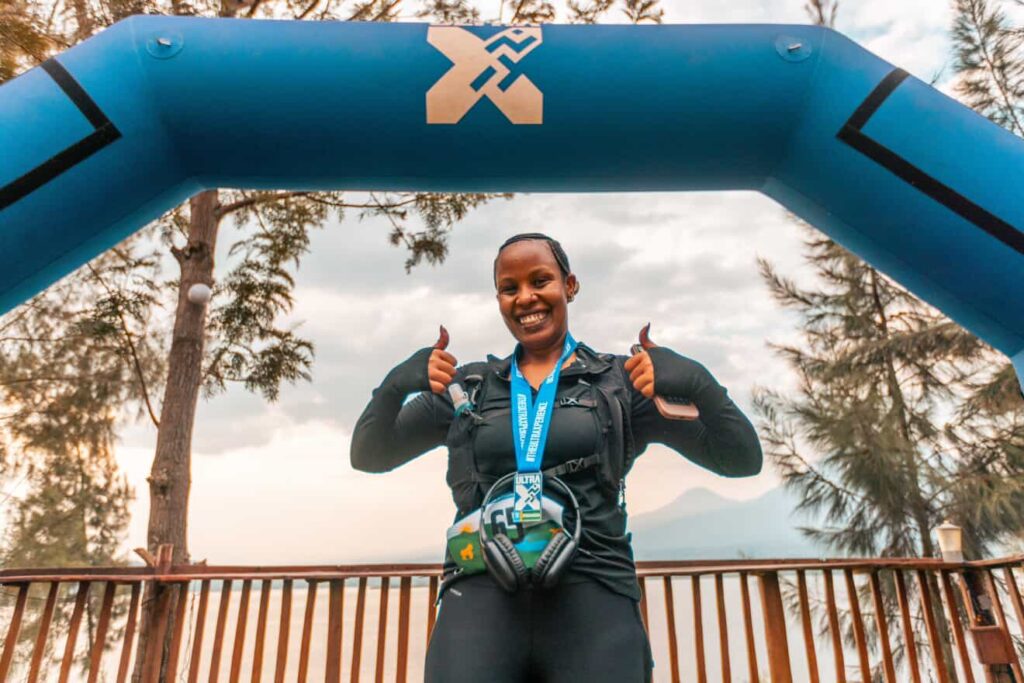
Completing my first ultramarathon is, so far, the endurance achievement I am most proud of.
You often run through village roads and natural landscapes — what does running in that environment feel like for you compared to city or track running?
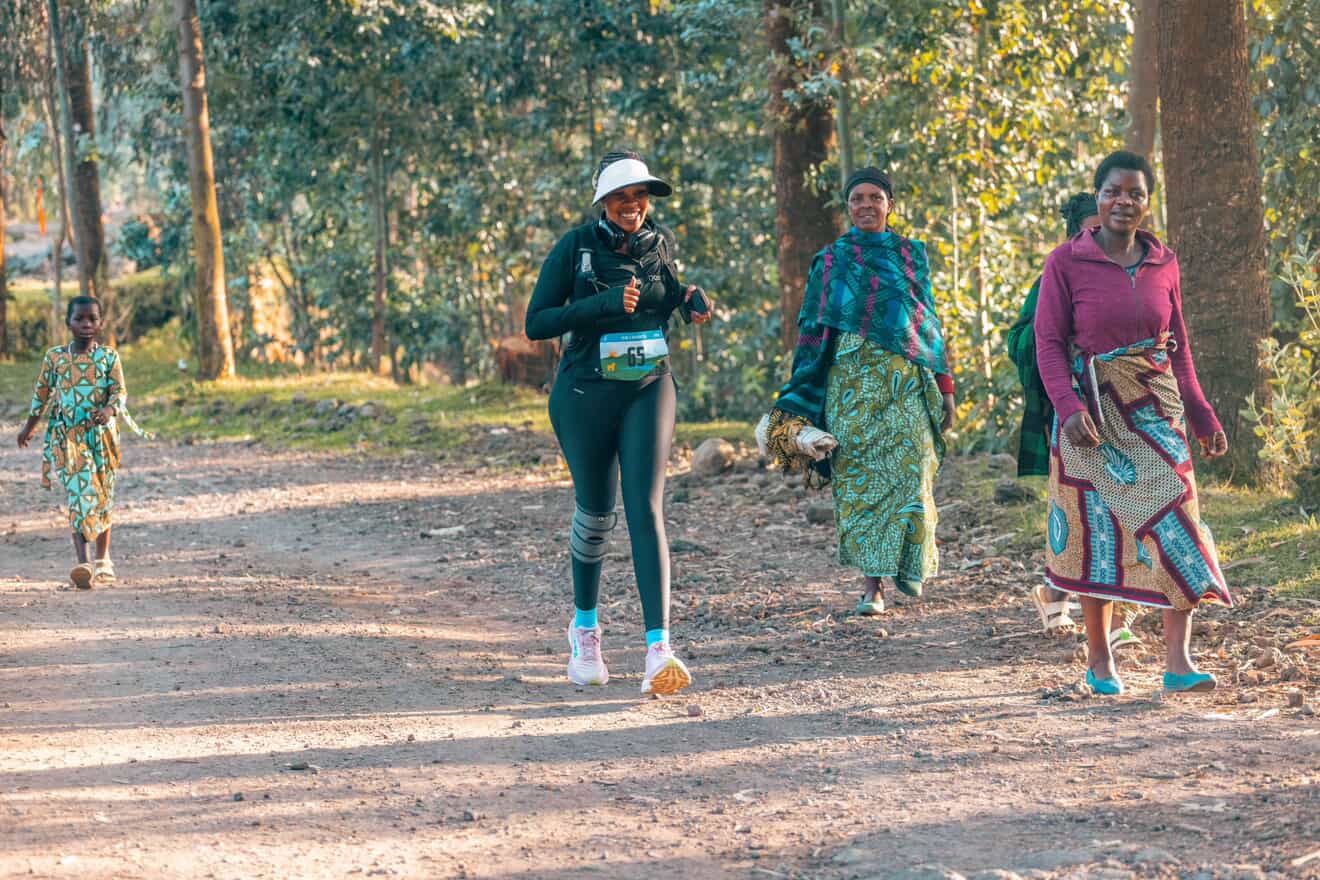
Running through village roads and natural landscapes feels completely different from running in a city or on a track. It’s less about speed and more about connection.
Running in the village is quietly powerful and free. There are no cheering crowds, no traffic noise — just birds, distant voices, maybe livestock, and your breath. It becomes meditative. No lanes. No strict timing. Just movement.
It feels like a conversation between you and yourself.
You’ve spoken about finishing runs you doubted you could complete — can you share one moment like that?
While training for my ultramarathon, I had a 40km long run. The furthest I had run at that point was 30km.
I woke up that Saturday morning with so much doubt because I remembered how much I struggled to complete the 30km long run. The 40km run was on the trails back in my village.
I was able to finish the run within the time my training app had predicted. I was very proud of myself that day.
What usually happens in your mind during the hardest part of a long run?
During the hardest part of my long run, something interesting happens — the noise in my mind gets louder before it gets clearer. At first, it’s resistance:
“Why did I start this?”
“I can slow down.”
“This is too much.”
That voice usually shows up when my body is tired but the finish line still feels far away. It’s the moment where doubt tries to negotiate.
But then another shift happens.
Instead of fighting the discomfort, I start breaking it down: one more step. One more breath. Just make it to that tree. Just finish this minute.
It’s a privilege to be doing this. I can do hard things.
The big distance becomes small, manageable pieces. Eventually, the mind becomes quiet.
There’s a strange calm that comes after you accept the discomfort. Your breathing finds rhythm. Your body settles. You stop thinking about quitting and start thinking about enduring.
What do you do on days you genuinely don’t want to run?
On days when I don’t want to run, I use the 30-minute rule. I get out of bed, put on my shoes, and run for 30 minutes.
If I’m feeling good after those 30 minutes, I continue with my run. If I still feel like I don’t want to run, I stop.
Most of the time, I finish my run because those 30 minutes help me gain momentum. The goal is to do it even when I don’t feel like doing it.
What does your training look like week to week, and how do you include strength work?
I have three runs a week and four strength training sessions.
- On Monday, I have a speed run in the morning and train my upper body in the evening (back, biceps, and core).
- On Tuesday, I train legs.
- On Wednesday, I train upper body (shoulders, chest, triceps, and core).
- On Thursday, I have an easy run in the morning and a gym session in the evening (glutes, hamstrings, and some mobility exercises).
- On Saturdays, I have my long runs.
I am not a professional, but this training plan is what works for me.
Which strength exercises help you most as a distance runner?
As a distance runner, the biggest mistake people make is thinking “more running = better running.” Strength work is what keeps you fast, stable, and injury-free.
For glute strength — which I consider the engine — I rely on hip thrusts, single-leg glute bridges, Bulgarian split squats, and lateral band walks. Your glutes power every stride, and when they’re weak, knee pain, hip issues, and slower pacing often follow. When they’re strong, your stride feels smoother and more controlled.
Single-leg stability is just as important because running is essentially a repeated single-leg movement. I train this through single-leg deadlifts, step-ups, walking lunges, and balance holds. These movements help reduce ankle and knee injuries and improve stride efficiency.
Core strength protects posture, especially during long runs when fatigue sets in. I focus on planks, side planks, dead bugs, and bird dogs. A strong core helps you stay upright even at kilometer 18 when everything wants to fold.
Calf and foot strength are underrated but critical. I include single-leg calf raises, bent-knee calf raises, toe raises, and foot-strengthening drills. Your calves absorb a huge amount of impact, and strong lower legs help you feel more resilient and springy.
If I had to choose the three most impactful exercises, they would be Bulgarian split squats, single-leg deadlifts, and side planks. That combination alone can transform your endurance and protect you long-term.
You’re based in Kigali, Rwanda — how does training and running there shape your experience as an endurance athlete?
Training in Kigali shapes you differently. It’s not flat, predictable, or gentle. It’s layered — hills, altitude, cool mornings, warm afternoons — and that changes everything.
The hills build relentless strength. Even a light jog turns into hill repeats. Running here builds leg strength, improves cardiovascular endurance, and forces mental toughness. When you race somewhere flat afterward, it feels unfair — in your favor.
Kigali sits around 1,500 meters above sea level. That subtle elevation makes your body work harder for oxygen. Over time, your aerobic capacity improves, your recovery becomes more efficient, and sea-level races feel smoother.
It’s quiet conditioning.
What kind of impact do you hope your running journey and content have on other women who follow you?
I don’t just want women to watch my runs. I want them to see themselves differently because of them — not “wow, she’s fast,” but “maybe I can try too.”
Strength isn’t loud or aggressive. It’s consistent. It shows up when you’re tired. It chooses discipline over excuses.
Especially in places like Rwanda — where many women carry families, responsibilities, and expectations — investing in physical strength is not selfish. It’s powerful.
I want to normalize heavy breathing, bad run days, doubt, and sweat without filters. Real endurance is built in the messy middle.
You don’t need fancy gear, expensive gyms, or a perfect body shape. You need shoes. A road. And a decision.
If my journey helps even one woman feel more confident, more capable, more connected to her body, or more willing to try something she once feared — then it’s bigger than kilometers.
How can beginners build distance safely without burning out?
Increase your weekly distance gradually — no more than 10% at a time. Your lungs adapt quickly, but your joints and tendons need more time. Respect that.
Go slower than you think you should. Most long runs should feel conversational. If you can’t speak in full sentences, you’re probably pushing too hard.
Keep one long run per week and let the rest feel manageable. Prioritize recovery — rest days, sleep, and hydration. That’s where your body actually gets stronger.
Pay attention to warning signs like persistent fatigue, irritability, heavy legs, and poor sleep. Those aren’t weaknesses — they’re feedback.
Endurance is built like a relationship — slowly, consistently, with patience. If you rush it, you break it.
Before we close, a few quieter details about the woman behind the kilometers.
Looking ahead, what running or endurance goals are you most excited to pursue next?
I am excited to run my second ultramarathon — 80km.
After a brutal long run or race — what’s your go-to reset?
A long cold shower, a nice big breakfast, and lying on the couch or bed for the rest of the day.
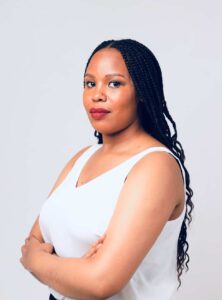
Connect with Kobusinge Diana
If you’d like to follow her journey or learn more about her work, you can find her here:
 Instagram: @dianek_fit
 TikTok: @dianek_fit
 Email: dianakobusinge4@gmail.com
Diana’s journey speaks so powerfully to resilience and performance, but it also ties into the bigger picture of women’s wellness and sustainable health—something I explored from another angle in my feature with Sherin.